
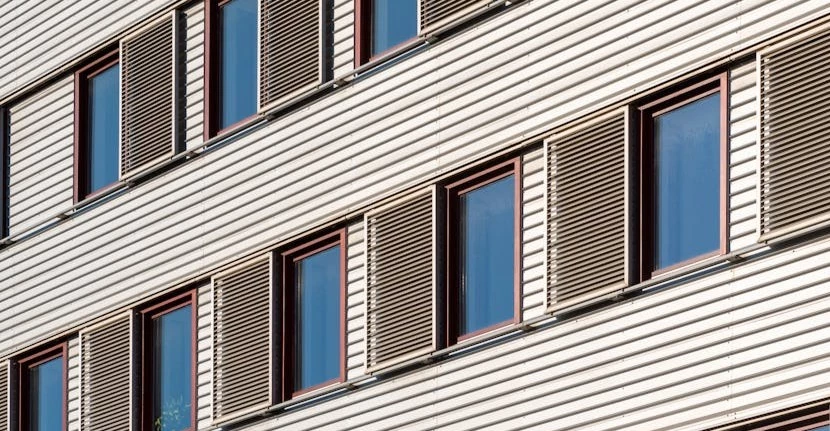
Aluminium Facades
Get in TouchAt Building Facades, we provide engineered building envelope solutions and across the UK that deliver a synthesis of structural durability and contemporary architectural identity. Our specialist teams provide fully integrated cladding solutions that protect structural substrates from environmental erosion while significantly improving the building's thermal envelope.
By merging advanced metallurgical knowledge with rigorous fire safety standards, we assist developers and architects in creating secure, sustainable building skins that satisfy the latest UK regulatory requirements.
What Are Aluminium Facades And Why Are They Utilised For Modern Buildings?
Aluminium facades serve as an engineered exterior skin designed to provide superior weather protection and thermal stability for modern developments. These systems are utilised because the material offers an exceptional strength-to-weight ratio, preventing unnecessary structural load on the primary frame while remaining virtually immune to atmospheric corrosion.
By implementing these envelopes, architects can achieve complex geometric designs that traditional masonry cannot support, resulting in a building skin that is both aesthetically versatile and operationally efficient.
What Types Of Aluminium Facades Are Available For Buildings?
We install a full range of aluminium facades designed to meet various height, insulation, and architectural requirements, including:
Solid sheet panels – High-durability A1 fire-rated modules that provide extreme rigidity for high-rise residential and public sector projects.
Composite mineral panels – Versatile multi-layer modules offering a balance of lightweight handling and enhanced thermal insulation.
Interlocking cassette modules – Precision-folded systems that create a flat, shadow-gap appearance for contemporary architectural designs.
Sinusoidal profiled skins – Robust industrial-grade cladding ideal for large-format distribution centres and logistics facilities.
Perforated solar screens – Functional decorative panels engineered to provide ventilation and solar shading for commercial atria.
How Much Do Aluminium Facades Cost?
The cost of aluminium facades ranges from £250 to over £850 per square metre, depending on the system complexity, panel finish, and insulation requirements.
Costs are primarily influenced by the selection of raw materials, the requirement for bespoke RAL colours, the total building height affecting access logistics, and the inclusion of non-combustible mineral wool to satisfy current fire legislation.
Contact Building Facades to get customised prices for getting aluminium facades at your property.
When Should Developers Choose Aluminium Facade Systems For Projects?
Specifying aluminium facades is the optimal choice when a development necessitates a low-maintenance exterior solution that provides guaranteed performance over a forty-year lifecycle. Developers should opt for these systems during the early design phase to ensure the building's structural frame is calculated to accommodate specific wind loads and thermal expansion rates.
This selection is also increasingly vital during safety refurbishment projects, where replacing combustible materials with non-combustible metal is a mandatory requirement for legal and insurance compliance.
What Services Are Provided For Building Exteriors?
Comprehensive lifecycle support is provided through aluminium facades to ensure every building envelope achieves maximum longevity and safety, featuring:
Technical system specification – Developing detailed CAD layouts and subframe engineering to align with the building's structural grid.
Bespoke panel fabrication – Manufacturing modules to exact tolerances in a controlled factory environment to ensure perfect site registration.
Professional system installation – Executing high-precision mechanical fixing by accredited engineers to guarantee long-term structural stability.
Weather integrity testing – Conducting site audits to verify that the moisture control cavities and drainage paths are fully functional.
Fire safety remediation – Managing the replacement of non-compliant cladding to bring existing structures in line with the Building Safety Act 2022.
Where Are Aluminium Facades Commonly Installed On Buildings?
External building elevations across frequently feature aluminium facades to provide a weathertight seal that guards against driving rain and environmental pollutants. These systems are most frequently integrated into the primary elevations of commercial high-rises and residential apartment blocks to define the building's arrival point.
By applying these panels to roofline parapets and gables, developers ensure a consistent moisture barrier, while soffit and column casings allow for a unified aesthetic finish across complex structural geometries.
How Do Aluminium Facade Systems Work In Modern Construction?
Aluminium facades operate on the rainscreen principle, where an engineered subframe creates a ventilated drainage cavity between the outer panel and the building's insulation. This configuration ensures that any moisture bypassing the panel joints is dissipated through airflow, preventing interstitial condensation from damaging the structural wall.
The system utilises pressure-equalisation technology and mechanical anchors to maintain a secure grip against extreme wind uplift, providing a resilient and breathable building skin.
Which Industries and Building Types Use Aluminium Facade Systems?
A diverse range of sectors rely on aluminium facades to achieve specific operational, aesthetic, and regulatory goals, including:
Healthcare and NHS trusts – Delivering hygienic, sterile building envelopes for hospitals that require minimal ongoing maintenance.
Higher education institutions – Creating modern campus structures that withstand high student footfall and environmental exposure.
Commercial hospitality groups – Ensuring hotel exteriors reflect high-quality branding while maintaining guest thermal and acoustic comfort.
Retail and consumer hubs – Facilitating rapid construction and providing high-impact visual identities for flagship shopping centres.
Logistics and data centres – Engineering robust, lightweight skins that protect sensitive internal machinery and high-value inventory.
What Safety Standards And Building Regulations Apply To Aluminium Facades?
Strict adherence to Building Regulations Approved Document B is the technical baseline for all aluminium facades installed to eliminate the risk of external fire spread. Following the Building Safety Act 2022, any system applied to buildings over 11 or 18 metres must achieve an A1 or A2-s1, d0 fire rating through third-party certification.
Our engineering team verifies every technical interface against BS EN 13501 benchmarks, providing developers with the documented safety proof required for regulatory building control sign-off.
How Durable And Weather Resistant Are Aluminium Facades?
The long-term environmental resilience of aluminium facades is underpinned by the metal's natural ability to produce a protective oxidation layer that halts structural corrosion. When finished with high-performance polyester powder coatings, these systems resist UV degradation and colour fade for up to forty years.
This resilience ensures that the building envelope remains impermeable to driving rain, maintaining the integrity of the internal insulation and reducing the frequency of facade renewals.
Contact Building Facades for a consultation to get aluminium facades which are custom designed for your construction site.